|
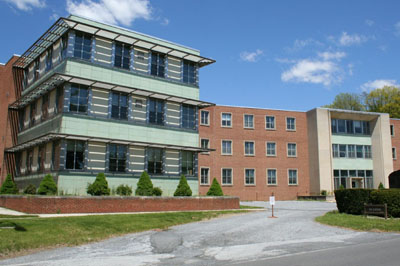
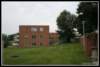
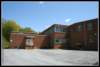
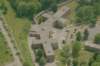
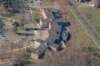
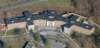
Built in 1958 and
named after superintendent
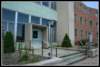
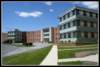
Hamblen Eaton, Eaton stands three stories tall and has a simple and
somewhat plain design. It's most noticeable and unique feature are
the day room sections that extend out from the front of the building
on either side of the entrance. On the exterior, the day rooms are
covered in green tile work that was commonly seen on building
constructed in the late 1950s. The dayrooms also have metal work just
above the windows on each floor. The metal work doesn't seem to have
any purpose other than for aesthetics. The building housed
schizophrenic, violent, and
uncontrollable patients. Until Eaton was completed these patients
were housed in the original
Violent Ward Buildings, when the patients were moved to Eaton
those buildings took on different functions. Other than the large
dayrooms, Eaton also featured a library, beauty salon, a pharmacy,
and a kitchen. There were also a few small hydrotherapy rooms,
but by the 1950s this method of treatment was being phased out in
favor of new medications. At each end of the building were isolation
rooms for the most uncontrollable patients. These rooms were not
intended for use as a patient's full time room, but as a place that
a patient was put temporarily until they calmed down and could be
returned to their normal room. Male and female patients both lived
in this building, but were segregated, with women on one side and
men on the other. In the center of the building was a small
administration like section that housed the lobby on the first
floor, elevators, and doctors offices on the upper floors. Eaton is
connected via the tunnel system to the rest of the building on the
campus. Even though the building is one of the most modern on the
campus and even has air conditioning, it has sat abandoned ever
since the hospital closed. The entire roof has already been replaced
once in it's life time, but continues to be a source of problems for
the building. Rain water still penetrates the roof to this day. Mold
has been growing in the building for years and water damage is
plainly visible throughout the building on all floors. An attempt
was made a few years ago to make the building usable, but the
contactor was unable to guarantee the complete removal of all
the mold and the plans were abandoned. Currently the building is
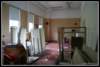
used for storage, it is packed to the brim with furniture and other
things from the hospital. It is also used to train police K-9 dogs,
which are let loose in the building in search of drugs that the
police officers hide amongst the ruins of old hospital furniture.
Most recently the building was used in May of 2010 as one of the
sets for the show Ghost Lab which will air on the Discovery Channel
for season two of the show. The future of the Eaton Building is
uncertain. Because of it's unique 1950s look it is not considered as
valuable as the other buildings on the campus. Once state funding is
allocated the building will likely be demolished, but that could be
years away from happening.
|
Interesting Facts About Eaton Building |
- In the first floor
lobby, on either side of the front door are two
flower beds. When the building was built the flower
beds had live trees and plants in them. The live
trees were soon replaced with fake ones. Medium
sized stones were put in the flower beds around the
fake trees. Patients quickly discovered the rocks
and began throwing them at hospital staff and each
other. As a result the rocks were smothered in a
clear glue so that the patients could not pick them
up. The rocks and trees are still present today and
can bee seen in my photos.
|
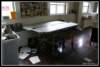
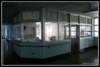
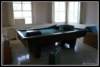
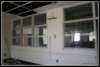
- One of the second
floor dayrooms contains a pool table that the
patients were allowed to play on. Occasionally the
patients would start to throw the pool balls at the
glass windows of the nurses station which is located
just outside the dayroom. As a result Plexiglas was
installed over the glass windows inside the dayroom.
This Plexiglas can still be seen today in my photos
as well as the pool table.
|
|
Submitted Photos of Eaton Building |
|
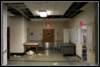
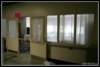
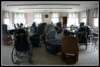
These are
photos of the Eaton Building taken by someone other than
the owner of this website and submitted with approval to
be posted here for others to see.
|
 |
|
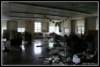
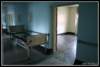
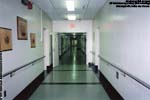
Taken Feb 1998, this photo shows the
discharge ward, E3 West |
|
|
|
|